London’s Green Belt is the ring of protected land around the capital where building is tightly restricted. For most of its history the question was whether to build on it at all. In 2026 the question has become how much, where and on what terms.
The London Society has been part of this argument for more than a century. Our 1919 Development Plan called for green spaces in the outer suburbs, an idea that led to the Green Belt, and we have hosted the debate about its future ever since. This page brings together the facts, the arguments on each side and what we have heard at our events.
Last updated: November 2026
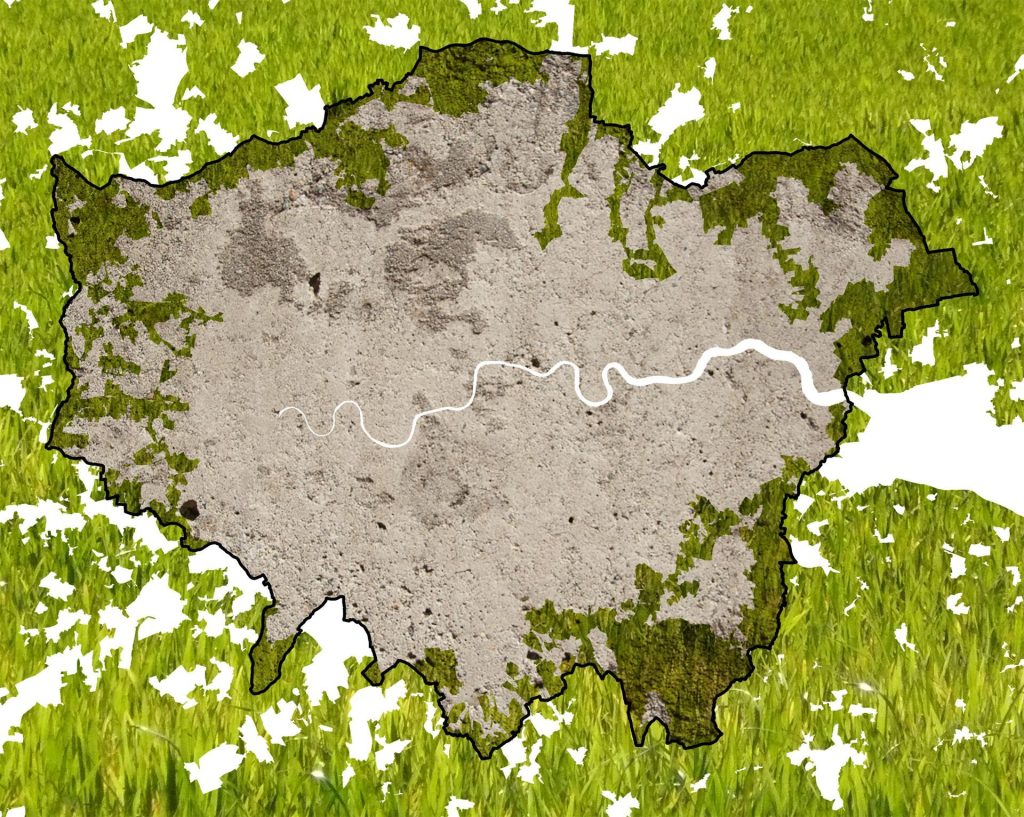
of Greater London’s land is Green Belt
hectares of Green Belt inside London, March 2026
homes proposed on Green Belt land in the draft London Plan
of London’s new homes still expected on brownfield land
National policy describes the Green Belt’s aim as preventing urban sprawl by keeping land permanently open. It is a planning tool for containing the city, not a measure of how green or accessible the land is. The 2021 London Plan, which protects it strongly, remains in force until a new Plan is adopted.
There is no settled answer, and the speakers at our debates have never agreed. What has changed is the policy. Both the government and the Mayor of London now accept that some Green Belt land will be needed for homes, while most new housing is still expected on previously developed, or brownfield, land.
Building on the Green Belt would not solve the housing crisis on its own. The draft London Plan expects about 90% of new homes to come from brownfield sites, with Green Belt land providing roughly a tenth of its ten-year target. The real disagreement is whether that tenth is necessary, and whether it will be built well.
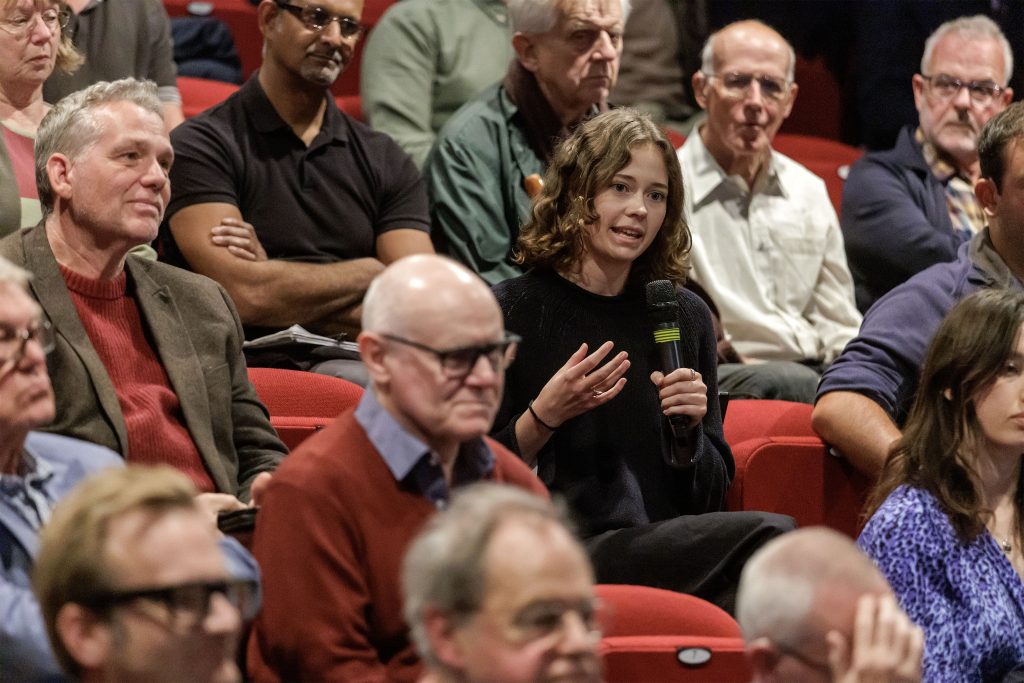
When we put the question to the vote in 2022, the audience split evenly.
In December 2024 the government introduced the idea of the grey belt. The current national planning policy defines it as Green Belt land, including previously developed land, that does not strongly contribute to the Green Belt’s main purposes.
The 2026 update to national policy also allows homes near well-connected stations in the Green Belt where a set of tests is met. CPRE London has warned that this risks normalising Green Belt development.
The Mayor published a draft London Plan in July 2026. It keeps a brownfield-first approach but concludes that brownfield land alone will not be enough. For the Green Belt it proposes:
Consultation closed on 15 October 2026. Inspectors are expected to examine the Plan in public in 2027, with adoption expected in early 2028.
Read our guides: 10 changes that could shape London’s future and what the draft Plan is and why it matters.
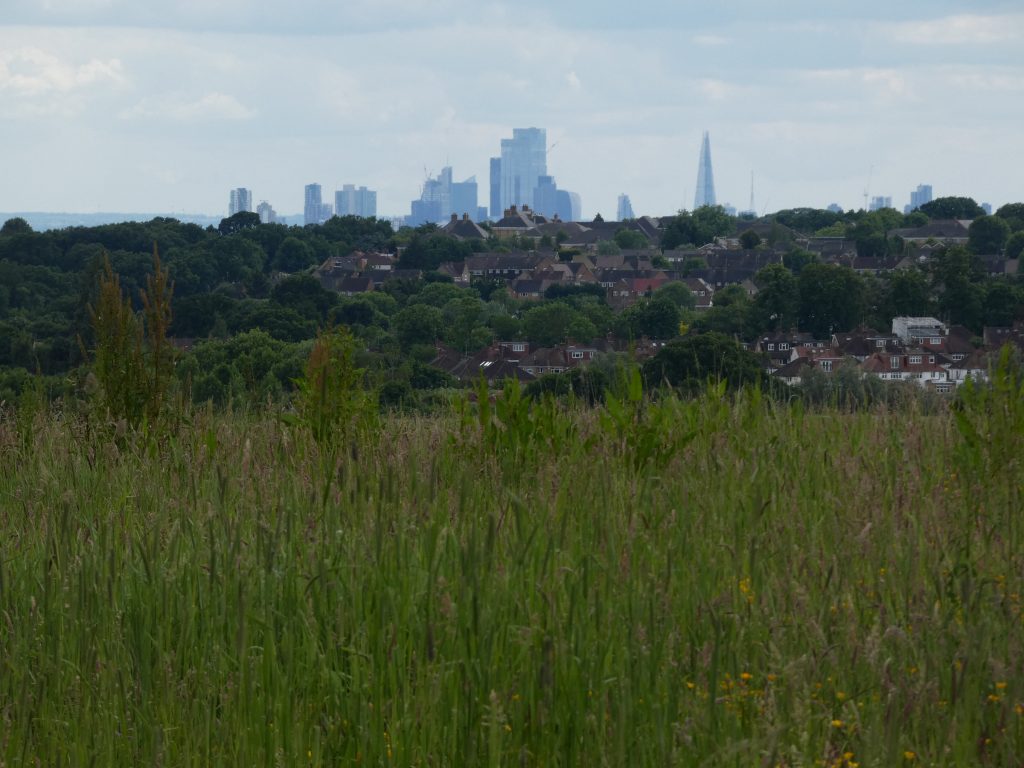
Green Belt makes up 37% of the borough of Enfield, and its Local Plan proposes about 9,200 homes on Green Belt land at Chase Park and Crews Hill. In March 2026 the government named Crews Hill and Chase Park among seven possible new towns, with around 21,000 homes.
After the May 2026 local elections the council’s new leadership withdrew its support. The government’s decision on which new towns go ahead was expected by the end of 2026 and has been postponed until 2027.
We held a public discussion in Enfield with the Enfield Dispatch in September 2025. Read the report.
Read more about the Society’s history and Jonathan Manns’s 2014 position paper for the Society, London’s Green Belt.
Our next talks, tours and debates on London’s housing, planning and future. See all upcoming events.
Short answers to the questions people ask most about London’s Green Belt.
It is a ring of land around London where planning rules tightly restrict new building, to stop the city sprawling outwards. Part of it lies inside Greater London’s outer boroughs and the rest in the surrounding counties.
About 22% of Greater London’s land area: 34,780 hectares in March 2026, according to government statistics. The Green Belt around London as a whole, which reaches well into the Home Counties, covers about 507,800 hectares.
Grey belt is Green Belt land, including previously developed land, that does not strongly contribute to the Green Belt’s main purposes. National policy now treats housing on this land more favourably.
Only in limited cases. The 2021 London Plan still applies and protects the Green Belt strongly. The draft Plan published in 2026 would allow planned development in specific places near stations, but it has not yet been examined or adopted.
The Society is independent and does not campaign for either side. Our role is to bring Londoners, professionals and policymakers together so the decision is debated openly and made well.
We run talks, debates and tours on housing and London’s future throughout the year. Membership is from £50 a year, and free for under-30s.
